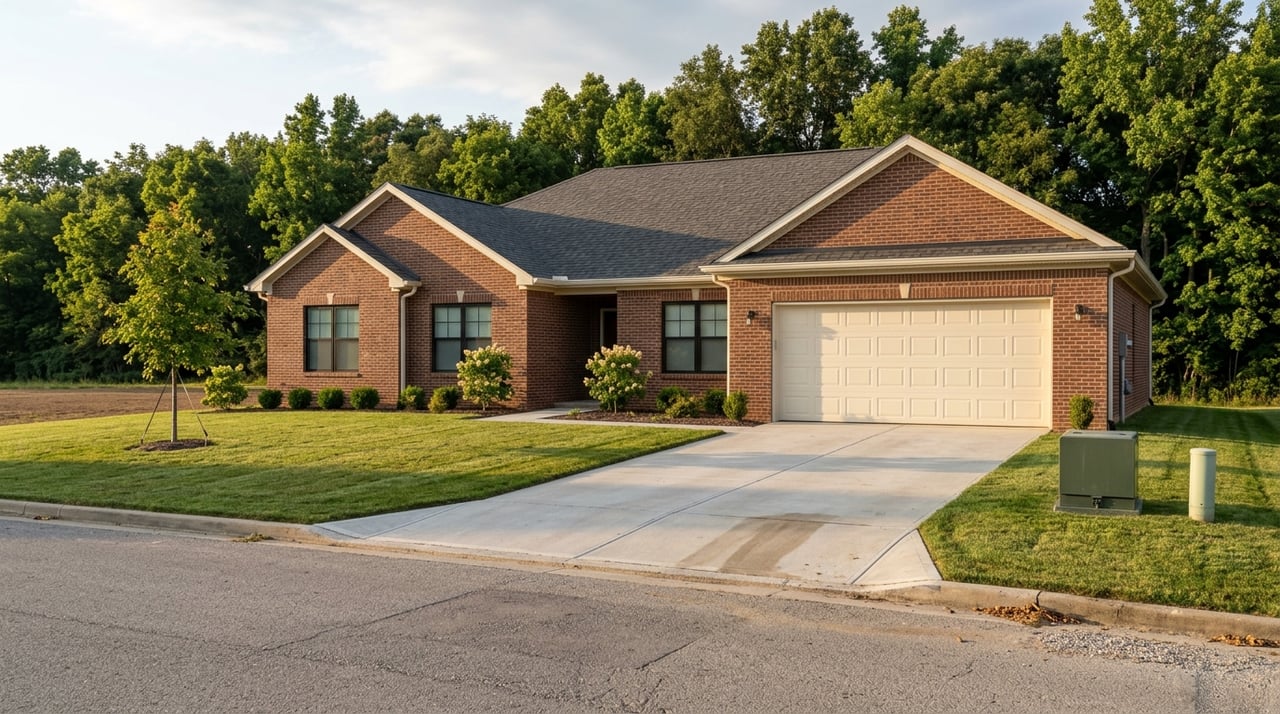
Thinking about buying land and building a home in Cox’s Creek? It can be a smart way to get the space, layout, and setting you want, but it also comes with more moving parts than buying an existing home. If you are comparing raw land, a buildable lot, and a finished new-construction home, the details matter early. This guide walks you through the key steps, local rules, and common risks so you can move forward with more confidence. Let’s dive in.
Why Cox’s Creek land needs extra review
Buying land in Cox’s Creek is not as simple as spotting an open parcel and assuming you can build on it. In Nelson County, land-use review happens at the county level, and the local planning commission notes that the countywide zoning map is still in progress and should be verified directly before you rely on an assumed use. You can review the active county zoning regulations and ordinances through Nelson County Planning and Zoning.
That matters because rural-looking land can still have limits tied to zoning, frontage, setbacks, floodplain rules, and utility requirements. If you are under contract on land, confirming those details before earnest money is fully at risk can help you avoid an expensive surprise.
Check zoning before you buy
One of the first questions to answer is whether your intended use is actually allowed on the parcel. In Nelson County’s A-1 Agriculture District, the ordinance describes the district as intended for agricultural and very low-density development, and it permits a single-family dwelling, including a farm dwelling, along with some manufactured-home uses when acreage thresholds are met. That does not mean every parcel is ready for every type of build.
Before closing on land, make sure you verify:
- The exact zoning district
- Whether your planned home is permitted by right or needs a conditional use permit
- Minimum frontage requirements
- Setback requirements
- Whether the lot can support the home size and any accessory structures you want
A parcel can look straightforward from the road and still run into restrictions once plans are drawn. This is one reason land purchases usually need more due diligence than a resale home.
Understand the permit process
If you plan to build, the zoning compliance permit is a major step in Nelson County. The application must come from the owner or someone with a valid ownership interest, contract, option, or written permission. It also requires supporting items such as a deed and or plat or survey, plus a scaled plot plan and other documents outlined by the county in the Nelson County zoning regulations.
The county’s rule is to approve or deny the zoning compliance permit within one week. After that, the building permit must be obtained within 60 days or the zoning compliance permit expires. The county also states that substantial completion must occur within 12 months or the permit can become void.
At the end of construction, a certificate of occupancy is issued by the Nelson County Building Inspector when the work matches the approved plans and regulations. For buyers, that timeline means planning ahead matters. Delays in financing, builder scheduling, or utility approvals can affect your path to closing and completion.
Confirm water service parcel by parcel
Water availability is one of the biggest differences between buying land and buying a finished home. In Nelson County, the Kentucky Drinking Water Branch lists both North Nelson Water District and Bardstown Municipal Water Department as active systems, and North Nelson Water District has an office in Coxs Creek. You can review the state’s active water system details for the area.
The practical takeaway is simple: do not assume water is available just because a parcel is near a road or near existing homes. Service should be confirmed for the specific property. You also want to understand whether any extension, tap, or utility work may be needed before construction can begin.
Sewer or septic can change everything
Many buyers assume a rural property automatically means septic, but that is not always true. Kentucky’s onsite sewage program is managed through local health departments, starts with an onsite evaluation of soil and site conditions, and requires permitting before anyone can construct, install, or alter an onsite sewage disposal system. The Kentucky onsite sewage program page outlines the statewide process, and in Nelson County the Lincoln Trail District Health Department handles inspections and permitting.
Local subdivision rules add another important point. In certain developments located within 1,500 feet of a public sanitary sewer, public sewer must be used rather than septic. Kentucky law is also clear that no onsite system can be built or changed without a permit, as shown in the state onsite sewage disposal regulation.
Before you buy, ask these questions:
- Can the parcel connect to public sewer?
- If not, has septic feasibility been evaluated?
- What soil or site limits could affect system approval?
- Will an existing system need inspection if the property already has improvements?
These answers affect both your buildability and your budget.
Review roads, access, and easements
Access issues can be easy to miss when you are focused on the land itself. Nelson County’s subdivision rules require utility easements and drainage easements in appropriate situations, and private-road divisions have special recording and inspection requirements. You can review those details in the county’s subdivision regulations.
If a parcel is served by a private road, buyers should understand who maintains it, whether the road has been properly recorded and inspected, and whether any surety or final approvals are still pending. For agriculturally zoned divisions with private roads, the county also requires the water main to be installed and approved by the water utility before the final plat is recorded.
This is why road access is more than a convenience issue. It can affect financing, construction timing, and long-term ownership costs.
Watch for floodplain and drainage concerns
Site feasibility is not only about the home itself. It is also about whether the land can reasonably support the improvements you want. According to county guidance and ordinances, floodplain exposure, drainage, utility easements, and driveway access all deserve review before closing. You can start with the county’s ordinance resources.
If a lot needs major site work to create safe access or manage drainage, your total cost may rise quickly. That is especially important if you are comparing a lower-priced parcel with a more finished lot in an established development.
Compare raw land, lot, and spec home
If you are deciding between buying land and building from scratch or purchasing a completed new-construction home, it helps to compare the tradeoffs.
| Option | Main Advantage | Main Risk |
|---|---|---|
| Raw land | More flexibility and possibly more space | More due diligence, site work, and utility uncertainty |
| Buildable lot | Some upfront planning may already be done | You still need to confirm builder, contract, and site costs |
| Finished new-construction home | Simpler path and faster move-in | Less flexibility on lot and design |
For many buyers in Cox’s Creek, the best choice depends on your timeline, budget, and comfort level with problem-solving. If you want more control, land may be worth the extra work. If you want fewer unknowns, a completed new-construction home may be the easier path.
Read the builder contract carefully
A builder contract and a builder warranty are not the same thing. The Federal Trade Commission explains that a builder warranty typically comes with new home construction and covers permanent parts of the home, while a home warranty is a paid service contract that often applies to items like appliances or HVAC systems. The FTC’s new-home warranty guidance is a helpful starting point.
The FTC also advises buyers to insist on a written estimate and a contract that includes the work to be done, materials, price, completion date, contractor contact information, and all promises made during negotiations. Its builder contract guidance also warns buyers not to pay the full amount up front and not to sign contracts with blank spaces.
When reviewing a builder agreement, pay close attention to:
- Exact home specifications and allowances
- How change orders are priced
- Who pays for site work and utility taps
- What happens if permits or utility approvals are delayed
- Warranty coverage and how claims must be submitted
- Whether independent inspections are allowed before drywall and before closing
On a semi-rural build, site-related costs can become the biggest surprise. The contract should make responsibilities as clear as possible.
Plan for inspections on a new build
A new home still needs an independent inspection. HUD materials for FHA-related new construction say the builder must provide a one-year warranty for new homes and strongly encourage buyers to get an independent inspection rather than relying only on the builder’s internal process. HUD’s inspection guidance for new homes covers items such as structure, mechanical systems, foundation, water source and quality, roof, walls, windows, doors, ceilings, and floors.
For buyers in Cox’s Creek, it is wise to think about inspections in phases. One inspection before closing is important, and another near the end of the builder warranty period can also help you catch issues while coverage is still in place.
Know how construction financing works
Financing a build is different from financing a resale home. According to the Consumer Financial Protection Bureau information cited in the research, construction loans may either be paid off in a lump sum or convert to a conventional mortgage. If the loan does not automatically convert, you may need to reapply for permanent financing.
That means your financing plan should match your build plan. Before you commit to land or a builder, make sure you understand when funds are disbursed, what triggers the next stage, and whether your long-term mortgage is already built into the process.
Expect the timeline to be longer
New construction often takes longer than buyers expect. Nelson County’s local process already includes timing rules tied to zoning compliance permits, building permits, and substantial completion. On top of that, national Census Bureau data show that in 2022 the average time from start to completion for one-unit buildings in the United States was 10.7 months, with homes built for sale averaging 9.7 months and owner-built homes averaging 13.3 months, according to the Census Bureau start-to-completion data.
That is a national benchmark, not a local guarantee, but it is a useful reminder. Land prep, weather, utility coordination, permitting, and builder schedules can all add time. If you need to move by a specific date, build in extra cushion.
A smart buying sequence for Cox’s Creek
If you want to reduce risk, follow a practical order of operations:
- Confirm zoning and allowable use through the county planning and zoning resources.
- Confirm water provider availability for the parcel using the state water system information.
- Confirm sewer or septic feasibility through the state environmental health resources.
- Review access, easements, drainage, and whether a private road is involved using the county subdivision regulations.
- If building, review the contract carefully, understand the warranty, and schedule independent inspections.
This sequence helps you solve the biggest buildability questions before you are too far down the road.
Final thoughts on buying land in Cox’s Creek
Buying land or new construction in Cox’s Creek can be a great fit if you want more control over your home and property. The key is to treat due diligence as part of the purchase, not something to figure out after closing. Zoning, utilities, septic, road access, permits, contract terms, and inspections all play a big role in whether the experience feels smooth or stressful.
If you want guidance as you compare lots, new-construction options, or resale homes in Nelson County, the Greg Hodges Group can help you evaluate the details and move forward with a clear plan.
FAQs
What should you verify before buying land in Cox’s Creek?
- You should verify zoning, allowed use, frontage, setbacks, water availability, sewer or septic feasibility, road access, easements, drainage, and any floodplain concerns before closing.
Does rural land in Cox’s Creek automatically qualify for septic?
- No. Septic requires an onsite evaluation and permit through the local health department, and some parcels near public sewer may be required to connect to sewer instead.
Can you assume a Cox’s Creek parcel has public water available?
- No. Water service should be confirmed for the specific parcel because availability can vary by property even within the same general area.
How long does new construction usually take in Cox’s Creek?
- Local permit rules and site conditions affect timing, but national Census data show new one-unit homes commonly take many months from start to completion, so buyers should plan for a longer timeline.
Should you get an inspection on a newly built home in Cox’s Creek?
- Yes. HUD guidance strongly encourages an independent inspection for new construction, and many buyers also benefit from a follow-up inspection before the builder warranty period ends.